

Political Parallels: Why Trump's Midterm Setback Doesn't Forecast Tinubu's 2027 Prospects
As Nigeria gears up for the 2027 elections, the defeat of Donald Trump's party in the U.S. midterms has sparked comparisons with President Bola Ahmed Tinubu's potential fate. However, experts argue that the political landscapes of the two nations are fundamentally different, cautioning against superficial parallels.
The Abuja Times
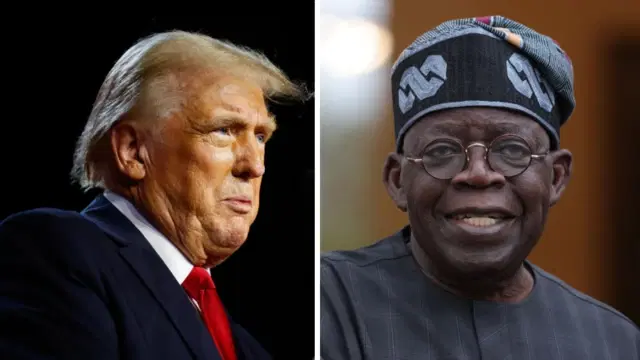
The recent electoral setback suffered by former President Donald Trump's Republican Party during the U.S. midterm elections has ignited discussions among Nigerian opposition politicians. They are drawing parallels between Trump’s political struggles and the anticipated fortunes of President Bola Ahmed Tinubu leading up to Nigeria's 2027 general elections. While this comparison may seem alluring, analysts stress that it lacks depth and fails to account for the distinct political realities in both nations.
Trump's defeat, which saw Democrats reclaim control of both chambers of Congress, is indeed a significant moment in American politics, reflecting widespread dissatisfaction with the Republican administration's policies. This outcome has prompted questions about the future direction of Trump's presidency, yet it is crucial to recognize that the factors leading to this political shift in the U.S. do not mirror those in Nigeria.
The complexities of Nigeria's political landscape are unique, shaped by its own socio-economic challenges, cultural dynamics, and electoral processes. As political analysts point out, the assertion that Tinubu could face a similar fate as Trump is overly simplistic. The political dynamics in Nigeria are influenced by a myriad of factors, including regional politics, party loyalty, and the electorate's expectations, which differ significantly from those in the United States.
“America is not Nigeria. Trump is not Tinubu. The political dynamics of the United States cannot be mechanically imported into Nigeria’s electoral calculations,” said a political analyst.
Furthermore, the strategies and narratives employed by Nigerian politicians, including Tinubu, may not resonate in the same way as they do in the U.S. context. Understanding these nuances is essential for both political observers and voters as they navigate the upcoming electoral landscape, ensuring that decisions are informed by local realities rather than foreign precedents.
Share this article with your network
Broadcast directly to WhatsApp communities and news circles.
The Abuja Morning Dispatch
Get the capital's most important political investigations, cabinet decisions, and economic intelligence delivered to your inbox every morning.
About The Abuja Times
Super Admin & Lead Director
Related Dispatches in News
Harnessing Institutional Wisdom: The Role of CORFEPS in Nigeria's Governance Transformation
The Council of Retired Federal Permanent Secretaries (CORFEPS) stands as a pivotal body in Nigeria's civil service reform, leveraging the vast experiences of its members to influence governance and public administration. With a focus on revitalizing the professional ethos within the civil service, CORFEPS aims to ensure that the knowledge and memories of retired public servants continue to serve the nation’s development needs.
Edo North Backs Oshiomhole's 2027 Senate Bid as Political Consolidation Grows
Edo North's support for Adams Oshiomhole's 2027 Senate campaign is solidifying as diverse community endorsements emerge, showcasing a strategic political shift. Oshiomhole's legislative achievements and community engagement efforts have resonated deeply within the region, positioning him as a formidable candidate.

Violence Erupts at Political Rally in Asaba, One Dead and Five Injured
A tragic clash at a political rally in Asaba has resulted in the death of one individual and injuries to five others, prompting heightened security measures in the area. The incident, which occurred during a procession organized by the Obedient/OK Movement, has raised serious concerns over political violence as the election season intensifies.