

Peter Obi Responds to Anambra Debt Allegations, Defends Fiscal Legacy
In a recent development, Peter Obi has refuted claims made by Anambra State's Finance Commissioner regarding outstanding debts from his tenure as governor, asserting that his administration left a strong financial foundation. The statement comes amidst ongoing discussions about the state's fiscal management under the current leadership of Governor Soludo.
The Abuja Times

The debate surrounding Anambra State's financial obligations has intensified, particularly following remarks from the state’s Commissioner for Finance, Izuchukwu Okafor. According to Okafor, the current administration under Governor Charles Soludo is grappling with the repayment of loans and debts incurred during the tenures of Obi and previous governors. This assertion has sparked a resurgence of scrutiny regarding the fiscal policies implemented by Obi while in office.
In response, Obi has taken to the public domain to clarify the fiscal landscape he left behind when he concluded his governorship in 2014. He emphasized that his administration not only ensured the prudent management of resources but also prioritized the welfare of Anambra citizens. Obi stated, “We left the state in a better position than we found it, with no outstanding debts that would cripple governance. Our focus was on sustainable development and infrastructural growth.”
The implications of these claims are significant, as they highlight the ongoing challenges faced by the Soludo administration in managing the state's finances. Critics argue that the current government's approach to debt management and expenditure could jeopardize future economic stability. This situation raises questions about the effectiveness of fiscal policies and the accountability of leadership in Anambra.
“A thorough review of our financial statements will reveal the true state of affairs,” Obi remarked, urging for transparency in the current administration's financial dealings.
As the conversation around Anambra's debt continues, it remains essential for stakeholders and citizens alike to assess the impact of past governance on the present economic climate. The discourse presents an opportunity for both accountability and reflection on the governance strategies employed by leaders in the state.
Share this article with your network
Broadcast directly to WhatsApp communities and news circles.
The Abuja Morning Dispatch
Get the capital's most important political investigations, cabinet decisions, and economic intelligence delivered to your inbox every morning.
About The Abuja Times
Super Admin & Lead Director
Related Dispatches in News

Sokoto Government Allocates N143 Million to Support Fire Incident Victims
In a significant move to aid recovery, the Sokoto State Government has disbursed N143 million to assist 76 verified victims of recent fire incidents. This financial support aims to help the affected traders and business operators rebuild their livelihoods and resume their commercial activities.

Violence Erupts in Niger State as Bandits Kill Five and Abduct Eighteen
In a devastating attack, suspected bandits in Niger State have killed five farmers and abducted eighteen individuals, leaving communities in fear as their homes and businesses were torched. The escalating violence underscores the ongoing security challenges faced by rural residents in the region.
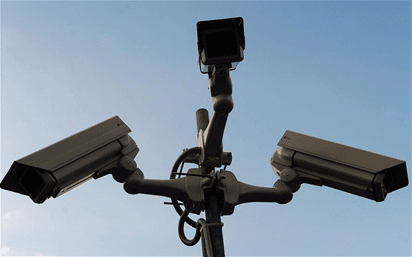
Nigeria's Digital Security Command Centres: Promises vs. Performance
As various states across Nigeria unveil advanced digital security command centres, questions arise regarding their effectiveness in addressing rising insecurity. Despite significant investments in technology for crime detection and prevention, incidents of violence and kidnapping persist in several regions.