

Libya's Parliament Speaker Agila Saleh Ousted After 12 Years in Office
In a significant political shift, Libya's long-serving parliament speaker Agila Saleh has been removed from his position after twelve years, amidst an evolving power dynamic in the country. His ousting reflects growing tensions within the eastern political landscape, particularly as rival factions vie for influence.
The Abuja Times
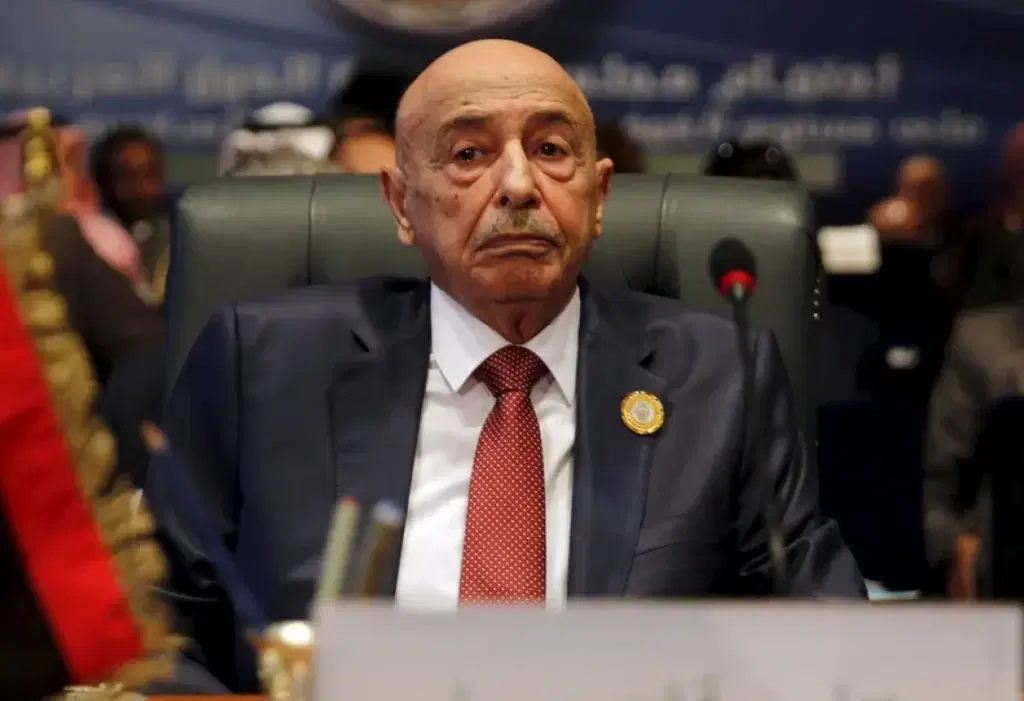
In a dramatic turn of events, Agila Saleh, the speaker of Libya's parliament, was ousted on Tuesday after serving for twelve years, marking a potential shift in the country's long-standing political landscape. The decision, made by members of parliament, led to the appointment of Al-Salhin Abdelnabi al-Obeidi as his successor, according to an announcement from the parliament's spokesman on social media platform X.
Saleh, 82, has been a prominent figure aligned with eastern military strongman Khalifa Haftar, who has exerted considerable influence over Libya's divided political scene. Since the overthrow of Muammar Gaddafi in 2011, the nation has struggled with violence and instability, split between the UN-recognized government in Tripoli, led by Prime Minister Abdulhamid Dbeibah, and a rival administration in the east, supported by Haftar's forces.
Analysts suggest that Saleh's removal signals a consolidation of power within Haftar's camp, particularly as his sons, including Saddam Haftar, have been increasingly asserting their dominance in eastern Libya's political affairs. Emadeddin Badi, a researcher at Chatham House, emphasized that “Agila Saleh appears to be the latest casualty of Saddam Haftar’s drive to centralize decision-making in eastern Libya and bulldoze his way into a political role.”
This political upheaval occurs amid ongoing discussions regarding a U.S. initiative aimed at revitalizing Libya's political process and promoting the unification of its fragmented institutions. As the country continues to navigate its complex political landscape, the ramifications of this leadership change could have significant implications for Libya's future stability and governance.
Share this article with your network
Broadcast directly to WhatsApp communities and news circles.
The Abuja Morning Dispatch
Get the capital's most important political investigations, cabinet decisions, and economic intelligence delivered to your inbox every morning.
About The Abuja Times
Super Admin & Lead Director
Related Dispatches in Africa

Egypt Dispatches Over 280 Aid Trucks to Alleviate Gaza's Bread Crisis
In a significant humanitarian effort, Egypt has sent more than 280 trucks loaded with essential supplies to Gaza, aiming to address a severe bread shortage caused by ongoing disruptions. The aid will be distributed by the Egyptian Relief Committee to support local bakeries struggling to meet the needs of the population.

Uganda Implements Travel Restrictions Amid Ebola Concerns from DRC
In a proactive measure to curb the spread of Ebola, Uganda has announced new travel restrictions for individuals arriving from the Democratic Republic of the Congo (DRC), following a recent outbreak linked to the Bundibugyo virus. This decision underscores Uganda's ongoing vigilance and preparedness in the face of infectious disease threats in the region.

Burkina Faso, Niger, and Mali Reengage with ECOWAS Amid Withdrawal Talks
Burkina Faso, Niger, and Mali have resumed diplomatic discussions with the Economic Community of West African States (ECOWAS) following their recent withdrawal from the regional bloc. The talks, led by Burkina Faso’s Foreign Minister Karamoko Traore and Senegal’s Foreign Minister Cheikh Niang, aim to address ongoing tensions and foster cooperation in the region.